

Introduction
"Cordless" is often used as if it describes the whole charging experience. It does not. A cordless table lamp may charge through a USB-C connection, a DC connector, contact points on a purpose-built base, or a supported wireless system. These are different arrangements with different operating questions for a restaurant, hotel or distributor.
USB-C identifies a connector. DC commonly describes a dedicated power connection. Wireless charging describes a method of transferring power without a plugged-in cable at the lamp. None of those labels alone guarantees charging speed, compatibility, runtime, included equipment or suitability for a hospitality fleet. Confirm the exact arrangement for the selected model before approving samples or placing a bulk order.
This guide is a practical specification checklist for buyers of rechargeable indoor table lamps. It deliberately avoids assuming that a connector or a product photograph proves an electrical feature. Use the model's current documentation, supplied accessories and sample review to make the final decision.
1. Separate the terms before comparing suppliers
USB-C: a connector, not a complete charging claim
USB-C is a physical connector format. It can make replacement-cable management familiar, but it does not identify the lamp's input power, charging protocol, battery capacity, supplied adapter, charge time or whether a particular cable will be suitable. The European Commission's common-charger guidance explains why USB-C has become a broadly used connector; it should not be read as a promise that all USB-C products behave identically.
For a lamp quote, ask where the port is located, the required input, the cable and power supply included, any approved replacement part, and the stated conditions for charging. If the port is on the lamp, inspect its accessibility and protection in the actual service environment. If it is on an external base, confirm the base is part of the approved SKU.
DC connection: model-specific equipment
A DC barrel or dedicated connection often relies on a specific adapter, cable or charging base. It may be entirely appropriate for a hospitality project, especially when the manufacturer provides a clear equipment set. What matters is not whether the connector appears less familiar than USB-C; it is whether staff can identify it, replacements can be obtained under agreed terms, and the charging workflow is repeatable.
Wireless charging: a separate product feature
Wireless charging transfers power without plugging a cable into the lamp at the point of use, typically through a compatible pad, base or charging surface. A product must be designed for and documented as supporting that method. A lamp that stands on a base is not necessarily charging wirelessly, and a lamp with charging contacts is not automatically a Qi device. Do not use "wireless charging" in product copy, purchasing documents or customer conversations unless the selected model's documentation supports it.
2. Why the distinction matters for hospitality operations
In a single home setting, a user may tolerate a specific cable or a longer charging routine. In a restaurant with dozens of lamps, small inconsistencies become a nightly task. Staff need to know what goes where, whether a unit is charging, how to collect it, and when it can return to service. The charging arrangement therefore affects labour, storage, purchasing of spares and the ability to prepare for the next shift.
For a hotel, the workflow varies by application. A bedside lamp may remain near a permanent socket. A bar table lamp may be collected every evening. A banquet team may need to identify lamps by zone and return them to a charging area between events. These requirements should be written into the buyer's brief before a product is selected.
| Question | USB-C or DC cable connection | Supported wireless charging system |
|---|---|---|
| What must be confirmed? | Port/connector, input requirements, cable, adapter, included equipment and charge indication. | Supported charging standard or base, alignment/placement method, included equipment and indicator behaviour. |
| What does the label not prove? | Speed, adapter compatibility, runtime or universal replacement availability. | Qi compatibility, output, charge time or that a visible base is actually a wireless charger. |
| Operational check | Can staff connect the correct equipment quickly without stressing a port or cable? | Can staff place each lamp correctly and see that charging has begun? |
| Order record | Exact cable/adapter/base and approved replacement reference. | Exact pad/base, supported method and approved replacement reference. |
3. Map the charging routine before selecting a feature
Begin with the number of lamps, service window and time between shifts. Then draw the physical route: table or room, collection point, cleaning point, charging position, storage, and redeployment. Use the sample to test that route. A feature is useful only when it reduces friction in the real routine.
Count charging positions, not sockets. If twenty lamps must be ready in the morning, determine where twenty approved charging positions will exist and how the power equipment will be managed. Do not improvise with undocumented splitters, unapproved adapters or stacked devices. The charging location, power provision and local safety requirements should be reviewed by the responsible operations and electrical professionals.
Ask the questions that reveal the real workload
- Which exact cables, adapters, bases or pads are included with the selected SKU?
- Where is the connection point, and can staff access it without moving delicate parts?
- What tells staff that a lamp is charging, charged or needs attention?
- Can lamps be assigned to a consistent charging location by room, table zone or model?
- What happens if one cable, base or adapter is lost?
- What are the stated charging conditions and any limitations in the product documentation?
These questions are appropriate for product documentation and supplier discussion. They are not an invitation to assume unsupported features. Keep the answers with the product code and sample record.
4. Assess charging and runtime as one system
Charging convenience does not establish service coverage. A lamp's useful operating period depends on its battery configuration, brightness setting, light distribution, age, conditions and the definition of useful light for the venue. Likewise, a high-capacity number on a spec sheet does not tell a buyer how fast a particular connector arrangement replenishes the lamp.
Test a fully charged representative sample at the intended service setting. Record the start time, control setting, room condition, useful endpoint and shutdown time. Then repeat when practical. The aim is not to create a marketing claim; it is to establish whether the selected setup can meet the project's own operating window. See our runtime testing guide for a repeatable sample record.
Do not derive charge time from connector type
USB-C does not automatically mean fast charging. Wireless charging does not automatically mean slower charging in every case. The only sound basis is the product's stated input and supported equipment, verified with the correct sample. Ask the supplier to state the applicable charge conditions for the exact model rather than relying on a general claim about a technology.
5. Sample test the practical details
A sample review should include the physical act of charging, not only the lamp illuminated on a table. Let the people who will collect and recharge units perform the process under normal conditions. Can they identify the correct equipment? Is the connection easy to see? Does the cable stay clear of work surfaces? Does the lamp sit securely on the intended base if one is provided? Can the charge indication be read without lifting it?
Photograph the approved setup and write down the exact components. If the lamp uses an adapter, record its reference and input specification. If it uses a base or pad, identify its model and quantity. If the project needs spares, ask which replacement components are available for the selected version and how they will be identified. Do not assume a generic consumer accessory is interchangeable.
Plan cleaning and inspection without damaging connections
Cleaning staff need the manufacturer's instructions for the finish, shade, control area and charging point. A port or contact should not be treated as water-resistant without a documented rating. Keep cleaning methods within supplied guidance and test any new method only with the supplier's agreement. During normal collection, look for loose parts, damaged cables and unusual indicators; route issues through the agreed support process.
6. Include charging in the factory and shipment review scope
Buyers sometimes request factory testing or pre-shipment inspection. Those activities are only meaningful when the required checks are specific. For a rechargeable lamp order, an agreed scope may compare the delivered model, finish, included accessories, labelling and basic charging indication against the approved sample and order confirmation. It should not claim that every unit has been certified, battery-tested or performance-validated unless that exact testing scope and evidence are available.
Before production, align the sample, purchase order and inspection instructions. List the SKU, version, finish, charging components, quantity, packaging and any essential marking. If a substitution is proposed-such as a different cable, adapter or base-treat it as a configuration change. Decide whether it requires a revised sample or written approval before goods are shipped.
Prepare the receiving check
When a shipment arrives, count the lamps and the associated approved equipment separately. Check visible model identification, finish and accessory quantity against the order. Keep the original paperwork, manual and approved sample record accessible to the operating team. This small preparation helps prevent a site team from attempting to charge a lamp with unsuitable equipment because the original configuration was not retained.
7. Write a charging-aware RFQ
A good enquiry names the application and the operating constraint. Instead of asking only for "cordless lamps with USB-C," state the room or restaurant use, number of lamps, service duration, available charging period, charging location, destination country, desired finish and target order date. Ask which current models fit the stated use and request the actual charging method and included equipment for each proposed option.
If wireless charging is required, say so explicitly and ask what system is supported by the exact model. If cable charging is acceptable, say whether a preferred connector is an operational preference or a hard requirement. Suppliers can respond more accurately when the buyer makes that distinction. For a broader order checklist, read our wholesale table lamp procurement guide.
FAQ
Does a USB-C table lamp have wireless charging?
No. USB-C identifies a connector. Wireless charging is a separate, model-specific feature that must be documented for the selected lamp and charging equipment.
Is USB-C always faster than a DC charger?
No. Connector type alone does not establish input power or charge time. Compare the exact product's stated charging conditions and approved equipment.
What should a restaurant ask about charging equipment?
Ask what is included, how many lamps can be prepared at once, where the connection or base is located, what indicates charging, how replacements are identified, and what operating conditions the documentation specifies.
Can I use a generic phone charger for a table lamp?
Do not assume so. Use the equipment specified or approved for the exact lamp and confirm compatibility with the supplier if a replacement is needed.
Hospitality settings to review in context
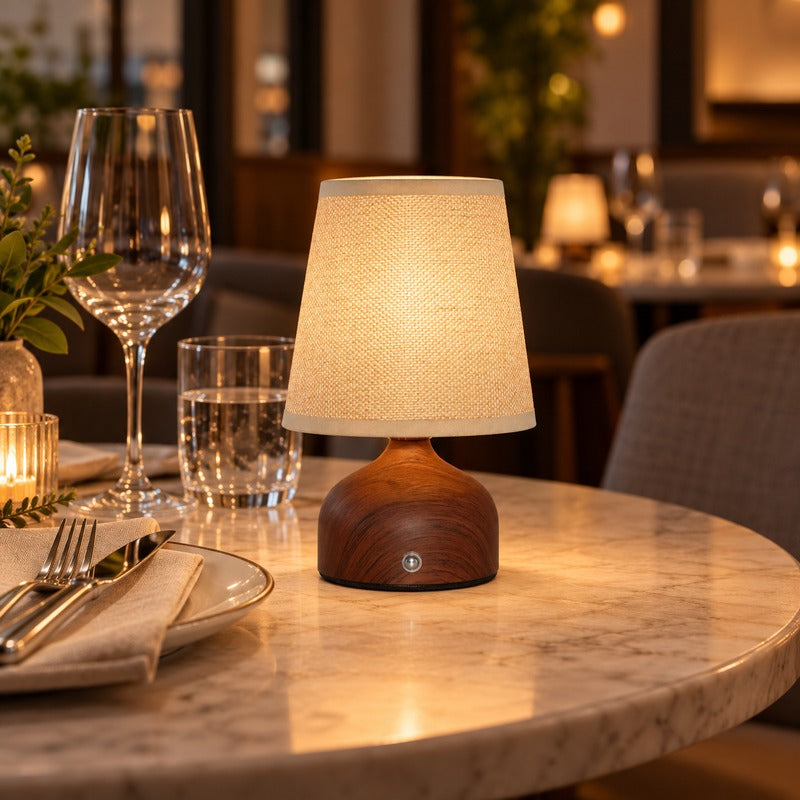
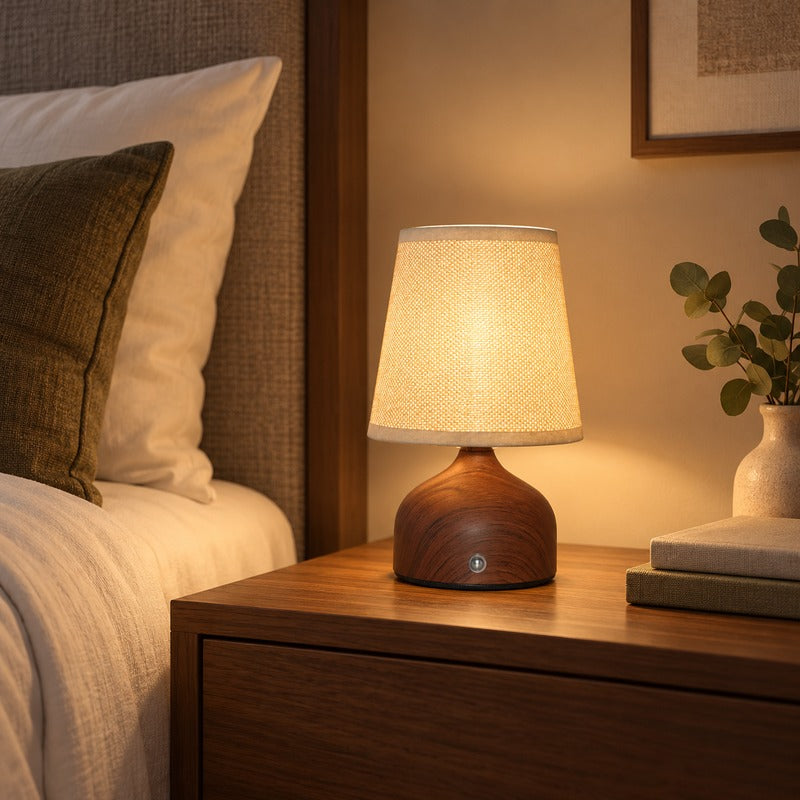
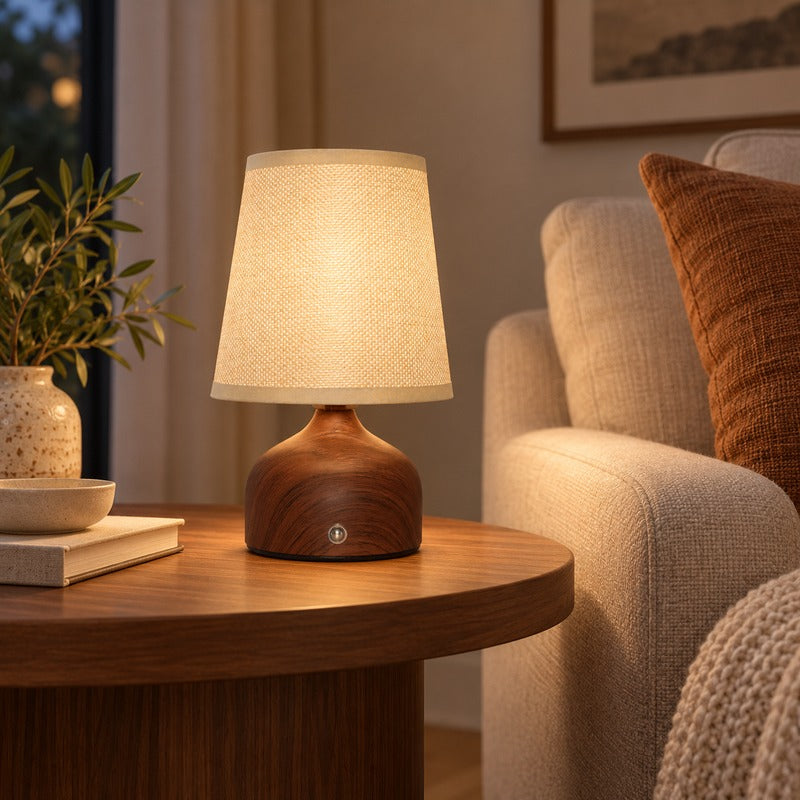
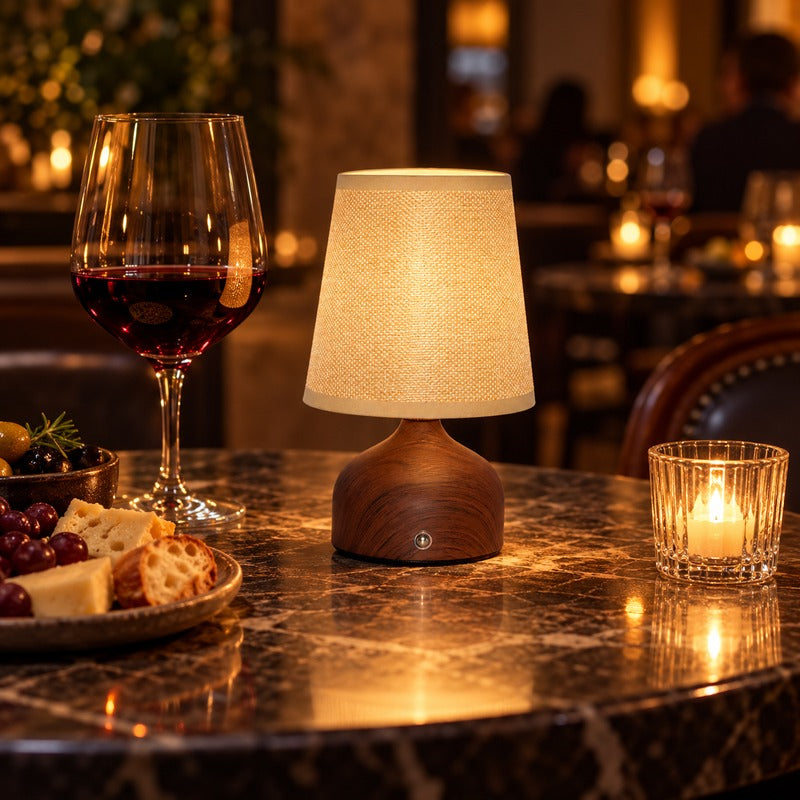
These product-faithful scenes illustrate indoor hospitality placements. Confirm the exact model, finish and charging arrangement for your own project.

Conclusion
USB-C, DC and wireless charging are not interchangeable phrases. They represent different elements of a rechargeable lamp's operating system. For a hospitality purchase, select the arrangement that staff can use consistently, verify it with the current product documentation and a representative sample, and retain the approved accessories in the order record. That is more valuable than adopting a technology label without a workable routine behind it.
Confirm the charging arrangement for your project
Browse DISLUNA's current indoor lamp collection, then send your project requirements. Include the application, service hours, number of units, charging area, desired finish and destination. We can confirm current product information and sample options for your enquiry.